
Bodkin Design Harnesses Spectral Sensing for Naval Reconnaissance
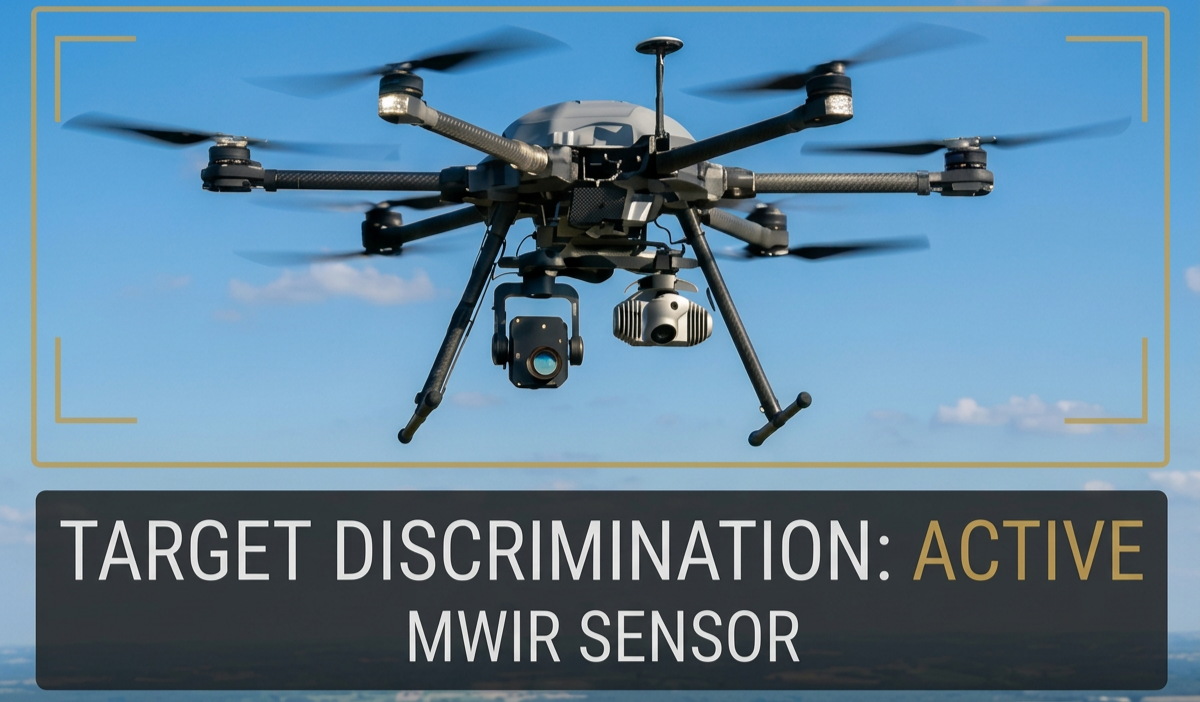
Bodkin Design & Engineering (BD&E) has been selected for award of a Small Business Innovation Research (SBIR) contract by the U.S. Navy
BD&E will leverage their patented compressive sensing technology to develop a compact, battery-operated, Mid-Wave Infrared (MWIR) hyperspectral video camera. Designed to be handheld or mounted on mobile platforms, the system will provide naval forces with real-time target discrimination and detection even through background noise and clutter.
Traditional hyperspectral systems are bulky, heavy, and slow, taking minutes to capture a single datacube. BD&E uses compressive sensing and Artificial Intelligence (AI) to overcome these speed bottlenecks. The proposed system will capture high-definition spectral datacubes at video rates, delivering hundreds of times more detailed spectral data than current commercial options while dramatically reducing size and power needs. The developed system will be the smallest, lowest power MWIR hyperspectral camera ever built.
This breakthrough innovation represents a new paradigm in machine vision technology. It will greatly expand the use of spectral imaging in defense, medicine and manufacturing.”
— Andrew Bodkin
Beyond military applications, this compact spectral video technology will find civilian uses in chemical analysis and quality control for manufacturing and research. The MWIR spectral region is especially useful for the analysis of hydrocarbons, including plastics and products of combustion, as well as environmental monitoring of pollutants such as natural gas, carbon monoxide, carbon dioxide, nitrogen oxides, and other gas emissions.
Importantly, the compressive technology developed here will also be adapted to other wavelength ranges for hyperspectral imaging in the Visible, Near, Short Wave, and Long Wave Infrared. The improvement in combined spatial and spectral resolution to be demonstrated in this program will enable numerous commercial applications, including precision agriculture for monitoring crop health, drought stress, nitrogen sufficiency, invasive species, and pest infestations; on-site mining applications; petroleum exploration; environmental monitoring of pollutants; emergency response for toxic chemical spills; forensic analysis; food processing safety and purity; medical imaging applications such as cancer screening and vascular, ophthalmic, and dermatological medicine.